
WeeklyLocal visibility: How it affects home service professionals
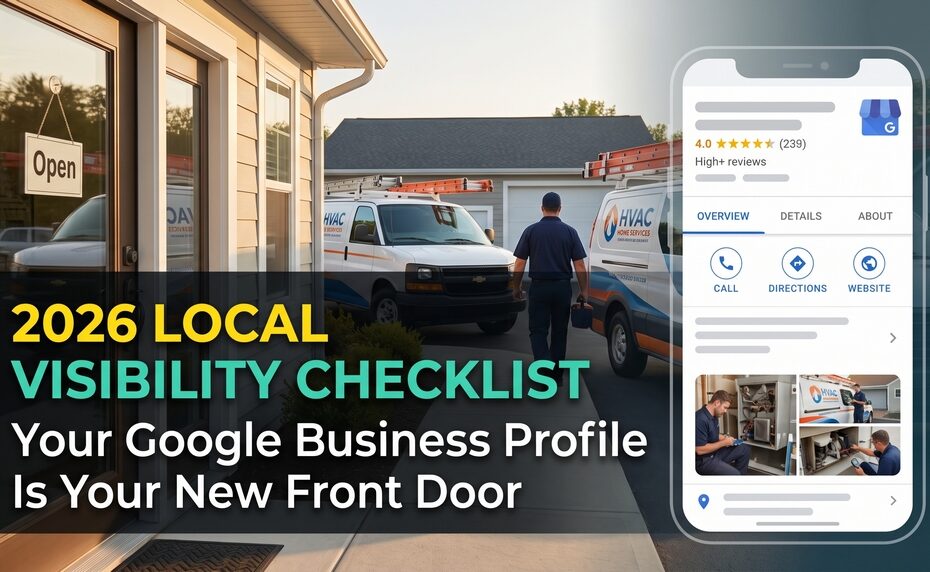
For many local businesses, a customer’s first interaction is not with a website. It is with a Google Business Profile. When someone searches for “roof repair near me,” “best HVAC company in Windsor,” or “bathroom remodeler in Hartford,” they may see local business listings before they see conventional website results. Within a few seconds, they can compare reviews, view photos, call a business, ask for directions, visit a website, or move to a competitor. This makes local visibility through your Google Business Profile one of the most important local marketing tools available to small businesses.
It is not just a directory listing. It is your digital storefront, credibility check, customer-service channel, and lead-generation asset. Google’s own website guidance recommends maintaining Business Profile information for businesses that want to be visible in local and generative AI search experiences.
Here is a practical checklist for making your Google Business Profile more complete, useful, and trustworthy.
Get the Local Visibility Fundamentals Right
Start with accuracy. Every essential business detail should be correct and match the information on your website, invoices, social media profiles, and other major business listings.
Review:
- Business name
- Main phone number
- Website URL
- Physical address, if customers visit your location
- Service area, if you travel to customers
- Regular business hours
- Holiday and special hours
- Appointment or booking link
- Business description
- Categories
- Service list
Inconsistent information creates immediate doubt. If your profile has one phone number and your website has another, customers may not know which is correct. If your stated business hours are wrong, someone may call and get no response when they expect help.
For service-area businesses, accurately reflect how you operate. Do not list every nearby city just because you would like leads there. Focus on the towns and regions you can genuinely serve well.
Choose Your Primary Category Carefully
Your primary category is one of the clearest signals you provide about what your business does.
A roofing company should select a category that accurately reflects roofing as its core service. An HVAC company should select the most relevant heating-and-air-conditioning category. A remodeling company should choose the category that best matches its primary line of business.
Secondary categories can provide useful context, but they should support—not dilute—your main business identity.
Avoid selecting every possible category. If a company lists unrelated services, customers may become confused and Google may have a harder time understanding what the business is truly focused on.
Review categories whenever you add a major service or change your core business model.
Create a Complete Service List
A prospective customer should not have to guess what you offer.
Use the Services section to list the work you actually provide. Be specific.
An HVAC company may list:
- Furnace repair
- Boiler installation
- Air-conditioning service
- Heat-pump installation
- Ductless mini-splits
- Indoor air-quality solutions
- Seasonal maintenance
A roofing company may list:
- Roof inspections
- Roof repair
- Roof replacement
- Asphalt shingle roofs
- Storm-damage repairs
- Skylight replacement
- Gutter installation
A remodeler may list:
- Kitchen remodeling
- Bathroom remodeling
- Basement finishing
- Home additions
- Cabinet installation
- Accessibility remodeling
- Design-build services
Each important service listed on your profile should have a supporting page on your website. If your Google profile says you provide water-damage restoration, customers should be able to click to a useful website page that explains the service, shows proof, and provides a clear way to request help.
Write a Helpful Business Description
Your business description should explain what you do, who you serve, and why a customer should consider contacting you.
Avoid keyword stuffing. A description filled with phrases like “best plumber Hartford, plumber in Hartford, emergency Hartford plumber” looks unnatural and does not build trust.
A better description might include:
- Core services
- Primary service areas
- Years in business
- Licensing or certifications
- Emergency availability
- Types of customers served
- Specialties
- Warranties or financing options
- A clear and factual differentiator
For example:
Family-owned heating and cooling company serving Windsor, Hartford, and nearby Connecticut communities. We provide furnace repair, boiler service, air-conditioning installation, heat-pump solutions, and maintenance plans for homeowners who want clear communication and dependable scheduling.
Be specific without making exaggerated claims. Avoid unverifiable language such as “the number-one company” or “the cheapest contractor.”
Build a Reliable Review Process
Customer reviews are powerful trust signals in local search. They help prospective customers understand how the company actually performs its craft.
Develop a consistent review process:
- Ask clients shortly after a successful job
- Send a follow-up email or text with a direct review link
- Include a review request in your job-completion process
- Train technicians and office staff to ask politely
- Follow up once when appropriate
- Respond to reviews in a timely, professional way
Remember: a customer leaving a review is a voluntary action. Do not pressure customers or offer incentives. Google wants genuine feedback from real clients. You should too.
Specific reviews are especially useful. A homeowner who writes that your technician repaired a boiler during a cold week, explained the work clearly, and left the area clean gives future customers a meaningful reason to trust you.
Free tip: If a customer does leave a review structured this way, make the review part of a case study. Put the case study on the location page where the service took place. This is positive proof that what you say about your business is true.
Respond to both positive and negative reviews. Thank customers who leave praise. When responding to criticism, remain calm, avoid arguing, protect private information, and focus on resolving the concern.
Add Original Photos Regularly
Many business profiles use too few photos or rely on generic images. That is a missed opportunity.
Use authentic photos of:
- Your team
- Company vehicles
- Office or storefront
- Completed work
- Before-and-after projects
- Equipment and tools
- Product installations
- Job-site activity
- Certifications, awards, or community involvement
For contractors, original project photos can be especially persuasive. They show that the company does real work in real homes and businesses.
Build photo collection into normal operations. Ask technicians, project managers, or office staff to submit images after each completed job. Obtain customer permission before sharing identifiable property images. From our experience working with dozens of home service pros, getting technicians to take images at the site can be daunting. After all, they are not photographers. You should explain the importance of taking the images and how it affects business prospects moving forward. That usually does the trick.
Fresh photos also help show that your business is active and current.
Keep Hours and Availability Accurate
Wrong hours create frustration and cost leads.
Review and update:
- Regular business hours
- Holiday closures
- Seasonal schedule changes
- Emergency-call availability
- Temporary office closures
- Weather-related adjustments
For emergency service businesses, make a distinction between office hours and emergency response availability. A restoration company may handle emergency calls 24/7 while operating standard office hours during the week. That is valuable information for a customer dealing with water damage, a failed heating system, or storm-related damage.
The more accurate your information, the fewer surprises customers face when they try to contact you.
Important! Google is now calling local businesses to confirm the hours of operation are accurate in their Google profile. Inaccurate hours in your Google profile can lead to a suspension. So don’t say you’re open 24 hours unless there’s a human being on the other end of the phone willing to take a call and schedule the service.
Connect the Profile to a Strong Website
Your Google Business Profile should send visitors to a website that reinforces confidence and makes the next step easy.
The linked page should be:
- Mobile-friendly
- Fast-loading
- Secure with HTTPS
- Clear about services and service areas
- Equipped with a prominent phone number
- Supported by reviews and proof of work
- Easy to navigate
- Built around clear calls to action
- Connected to relevant service pages
Google recommends that business websites remain crawlable, technically sound, and helpful for people who arrive from Search. Review Google’s official website and page-experience guidance.
If a prospect clicks through from your profile to a confusing or outdated website, the profile may have generated interest, but the website can still lose the job.
Use Posts for Timely Updates
Google Business Profile posts can help you communicate timely information.
Useful post ideas include:
- Seasonal maintenance reminders
- Recent project completions
- Limited-time offers
- Holiday scheduling notices
- New service announcements
- Educational homeowner tips
- Community involvement
- Hiring announcements
- Emergency-preparedness reminders
A heating company could post a quick winter reminder about furnace maintenance and link to a heating-service page. A roofer could share a completed storm-damage repair project and explain what homeowners should do if they notice a leak.
Posts should be useful and relevant. They are not a substitute for website content, reviews, or a complete profile, but they can support your overall local marketing activity.
Look for Unauthorized Profile Edits
Google Business Profiles can receive suggested edits from users or automated updates. That means important details can occasionally change without you realizing it.
Check regularly for changes to:
- Business name
- Phone number
- Address
- Service area
- Website link
- Categories
- Business hours
- Services
- Map location
- Attributes
It is much easier to correct a mistake quickly than to discover months later that customers were calling an outdated number or visiting an incorrect website link.
Use Business Profile and Search Console Together
Google Business Profile provides data about calls, website clicks, direction requests, and profile engagement. Search Console shows how your website performs in Google Search.
Use both.
In Google Search Console, monitor:
- Searches for your business name
- Service-related searches
- City and town searches
- Website clicks and impressions
- Mobile performance
- Important indexed pages
- Errors affecting priority URLs
Google’s Generative AI performance reporting can also help website owners understand how often their content appears in AI-powered Google Search features.
The goal is not to obsess over one metric. The goal is to understand the entire customer path: profile view, website visit, phone call, form submission, booked job, and revenue.
Make Local Visibility Management Routine
A neglected profile can make your local visibility disappear. Make profile management a recurring marketing task.
Weekly
- Respond to new reviews
- Check customer questions
- Watch for incorrect edits
- Add a current photo when available
Monthly
- Review calls and website clicks
- Add project or team photos
- Update service information
- Publish a useful post
- Compare branded and local queries in Search Console
Quarterly
- Audit profile details against your website
- Review categories and services
- Evaluate local competitors
- Update seasonal information
- Confirm key landing pages are live and indexable
Your Google Business Profile is often the front door of your business. Keep it complete, accurate, active, and connected to a website that makes the customer’s next step easy.
Want help making it stronger? Elvin Web Marketing can audit your Google Business Profile, local website presence, and organic search visibility to identify practical opportunities for growth.